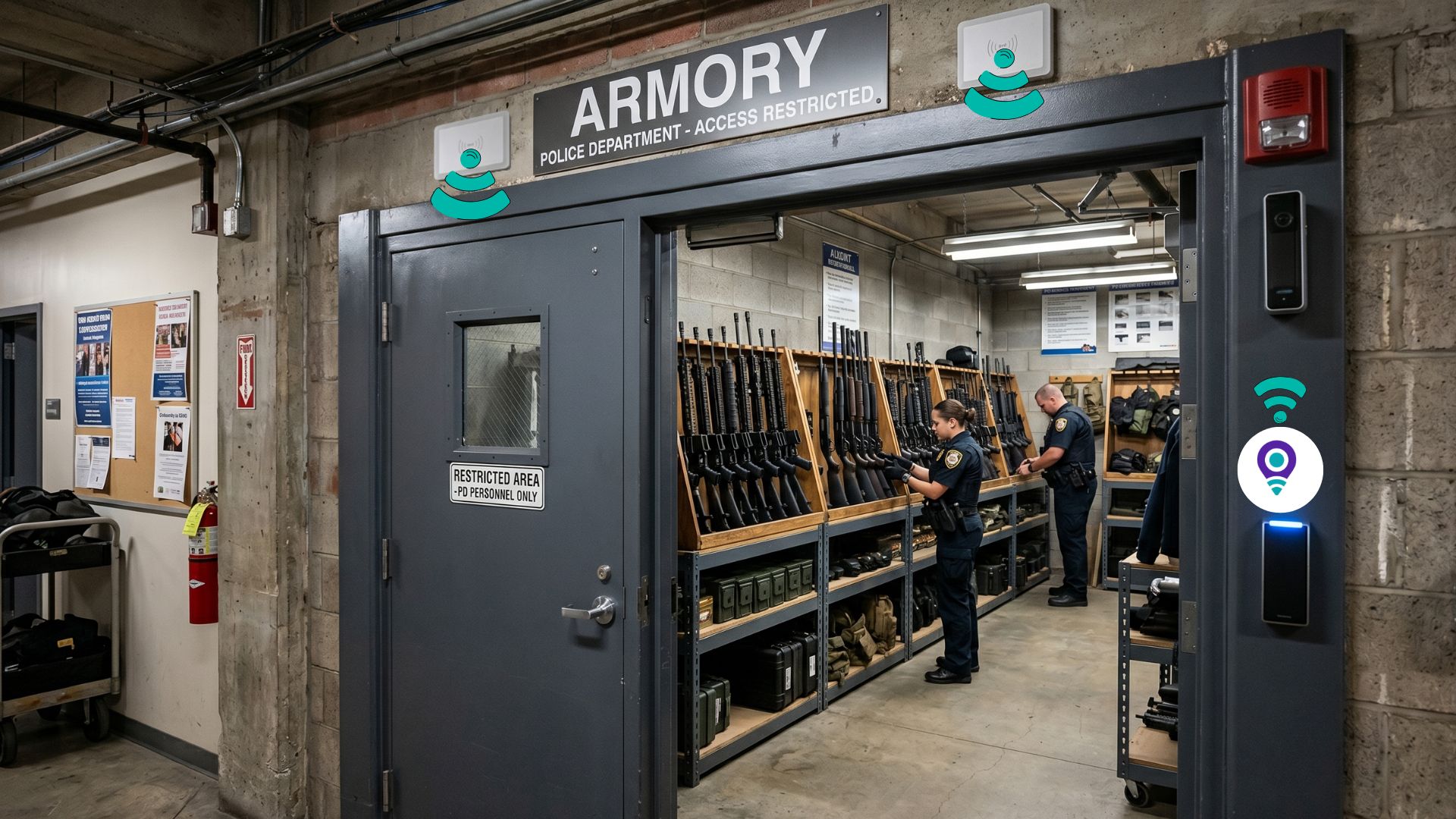
In a police armory or a military arms room, a missing weapon is never just a paperwork problem — it is an incident. Manual ledgers, spreadsheets, and barcode logs were never built to withstand shift-change volume, 24/7 operational tempo, or the scrutiny of an internal affairs review.
An RFID armory management tracking system replaces that manual chain with an automated one. Tagged weapons are read passively as they move through racks, issue windows, and exit points — no line-of-sight scanning, no end-of-shift reconciliation by hand. For agencies that answer to use-of-force reviews, evidence audits, and command inspections, that automated record becomes the single source of truth.
This guide walks through the deployment process IoTWeaponTracker uses with law enforcement and military clients, from the initial site assessment through to long-term system maintenance.
What an RFID Armory Management Tracking System Actually Does
The system assigns every firearm, magazine, optic, and piece of tactical gear a unique digital identity through an embedded or attached RFID tag. Fixed readers at racks, doorways, and issue counters detect that tag the moment it enters or leaves a read zone. They automatically log who took it, when, and where it is headed. This works without requiring an armorer to scan a single barcode.

01 – RFID Weapon Tags
Ruggedized transponders rated for metallic environments and field handling. Available embedded in grips or externally mounted on magazines, optics, and cases.

02 – Readers and Antennas
Ruggedized transponders rated for metallic environments and field handling. Available embedded in grips or externally mounted on magazines, optics, and cases.
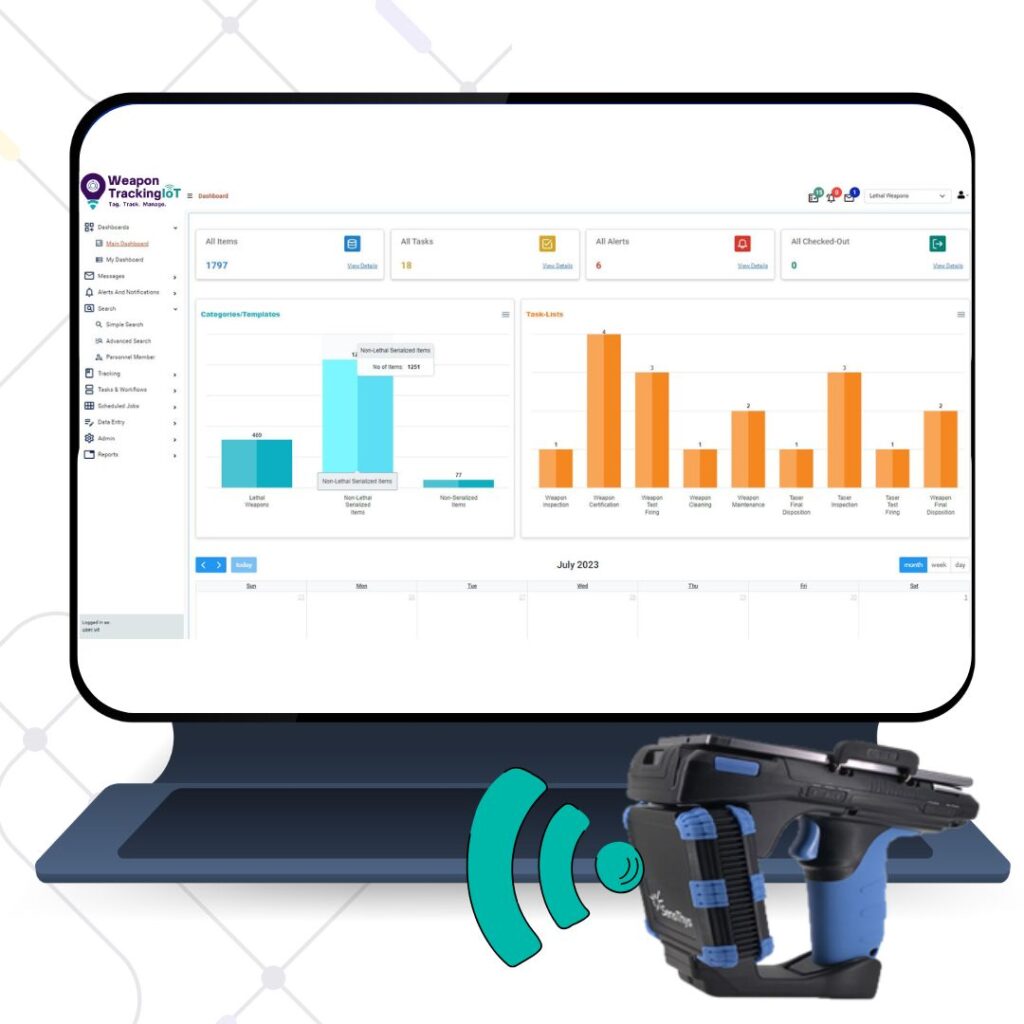
03 – Armory Tracking Software
The command dashboard: live inventory, transaction history, maintenance flags, and exportable compliance reports.
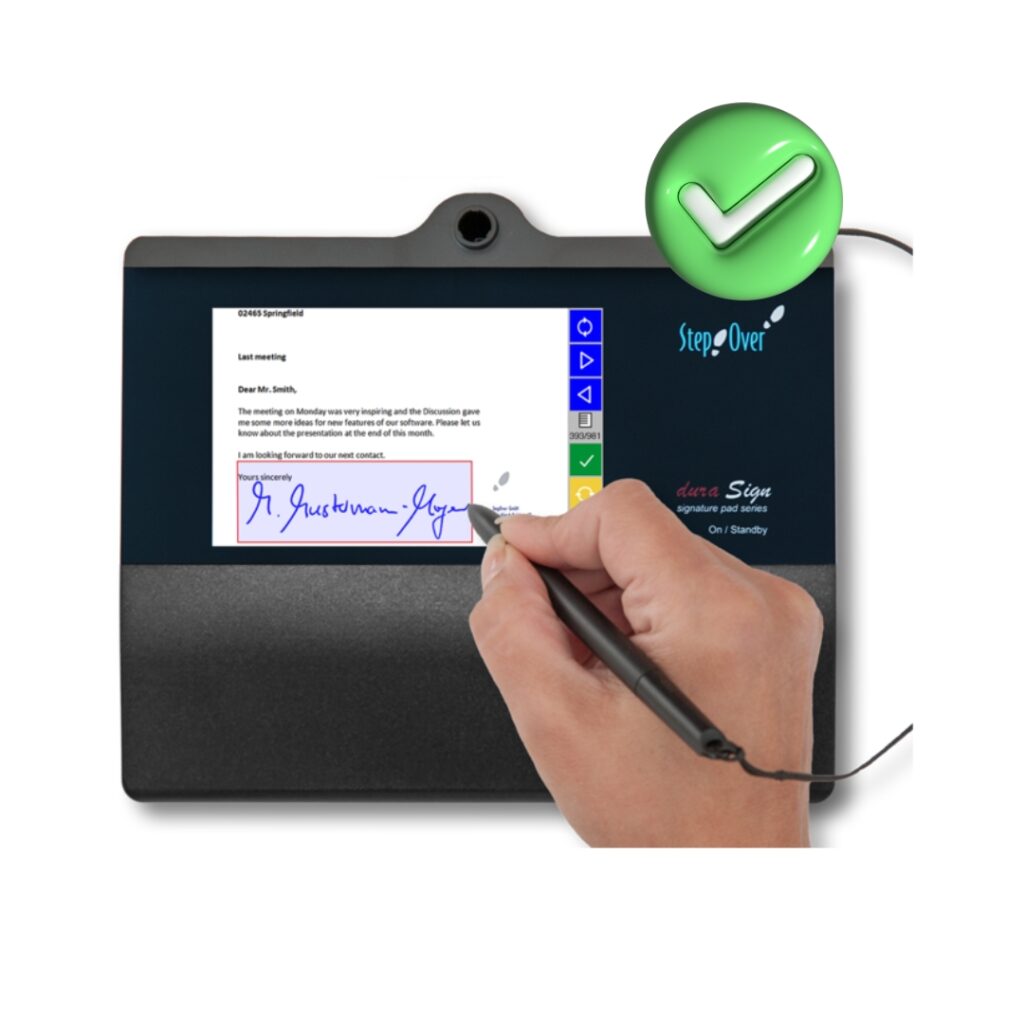
04 – Personnel Authentication
CAC/ID cards, PIN pads, or biometric scanners ensure only credentialed personnel can authorize a check-out.
The Setup Process, Phase by Phase
Police or military armories sequence deployment to minimize disruption to daily issue-and-return operations because they cannot go offline for installation.
Phase 01
Site Assessment and Infrastructure Planning
A facility survey precedes any hardware install. This maps every high-traffic entry and exit, storage rack, and issue-and-return window in the armory, identifying optimal antenna placement and ruling out dead zones — gaps in coverage where a weapon could pass undetected. For multi-room arms facilities or distributed substations, this phase also maps how zones will report into a shared, centralized inventory.
Phase 02
Tagging and Registering Weapon Assets
Armory teams physically tag every firearm and accessory — embedding tags in the grip for discretion and durability, or mounting them externally for magazines and optics — then register each item against its serial number, make, model, and assigned unit. This creates a permanent digital twin of each physical weapon, forming the foundation for every later transaction record.
Phase 03
Installing RFID Tracking Stations
Hardware goes in at three categories of checkpoint:
- Issue and return windows – Antennas detect weapons the instant they’re handed off, updating the digital ledger in real time.
- Armory doorways and exit points – Monitoring portals form the last line of defense, flagging any weapon movement that wasn’t authorized at check-out.
- Inventory scanning zones – Optimized for handheld scanners, letting an armorer audit a full rack in seconds instead of hours.
Phase 04
Integrating With Access Control and Alert Systems
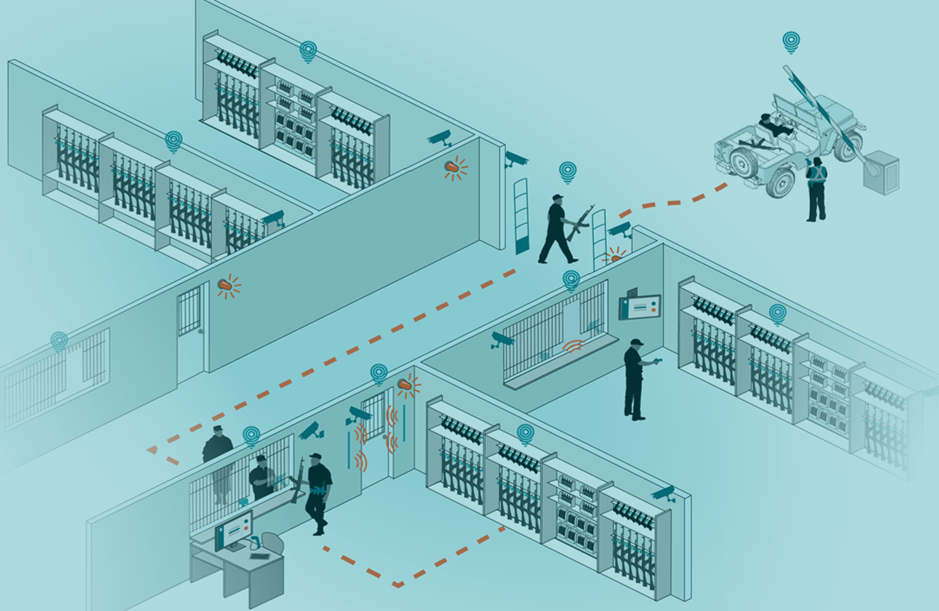
The tracking system earns its keep when you wire it into the broader security stack, not when it runs in isolation. When a tagged weapon approaches an exit without a matching authorized check-out, the system can trigger a layered response automatically:
- Unauthorized removal detection — Doorway antennas can signal facility locking mechanisms the moment an unmatched asset is detected.
- Automated alerts — Mobile push, desktop pop-up, or audible alarm to security personnel and the duty officer.
- Video surveillance triggers — Nearby cameras switch to high-resolution recording the instant an anomaly is flagged.
Why this matters operationally
For an armory, the value isn’t just inventory accuracy – it’s the automated tripwire. A weapon moving toward an exit without a logged check-out should never depend on a human noticing.
Phase 05
Configuring Compliance-Ready Audit Trails
The system writes every transaction — issue, return, transfer between units, or maintenance pull — to a tamper-evident digital log with a timestamp and authenticated user ID. For agencies operating under internal affairs review, evidentiary chain-of-custody requirements, or command inspection cycles, your team can configure this log to export in the format your records management or evidence-tracking system expects. This gives investigators and auditors a transparent record without manual reconstruction.
Phase 06
Staff Training and Workflow Adoption
Armorers and issuing officers walk through the new check-out, return, and alert-response workflows before go-live. When staff understand exactly what the system logs and why, they adopt it more smoothly and minimize friction during the legacy-to-automated transition.
Phase 07
Ongoing Maintenance and Scaling
Periodic reader and antenna testing confirms signal strength holds across every zone, and software updates keep the system current against emerging threats. Handheld spot-checks between full audits catch a damaged tag or a weapon shelved in the wrong rack before it becomes a discrepancy. As needs grow, the same platform extends to GSM – GPS weapon tracking for field deployment or analytics across multiple facilities.
Command Center Visibility
Once live, the RFID armory management dashboard becomes the operational picture for command staff: real-time inventory across every linked facility, maintenance cycles, and a searchable history of every transaction. The system captures data automatically at the point of movement, instead of users entering it after the fact. The record holds up as the authoritative source during reviews, audits, and after-incident reconstructions.