Introduction
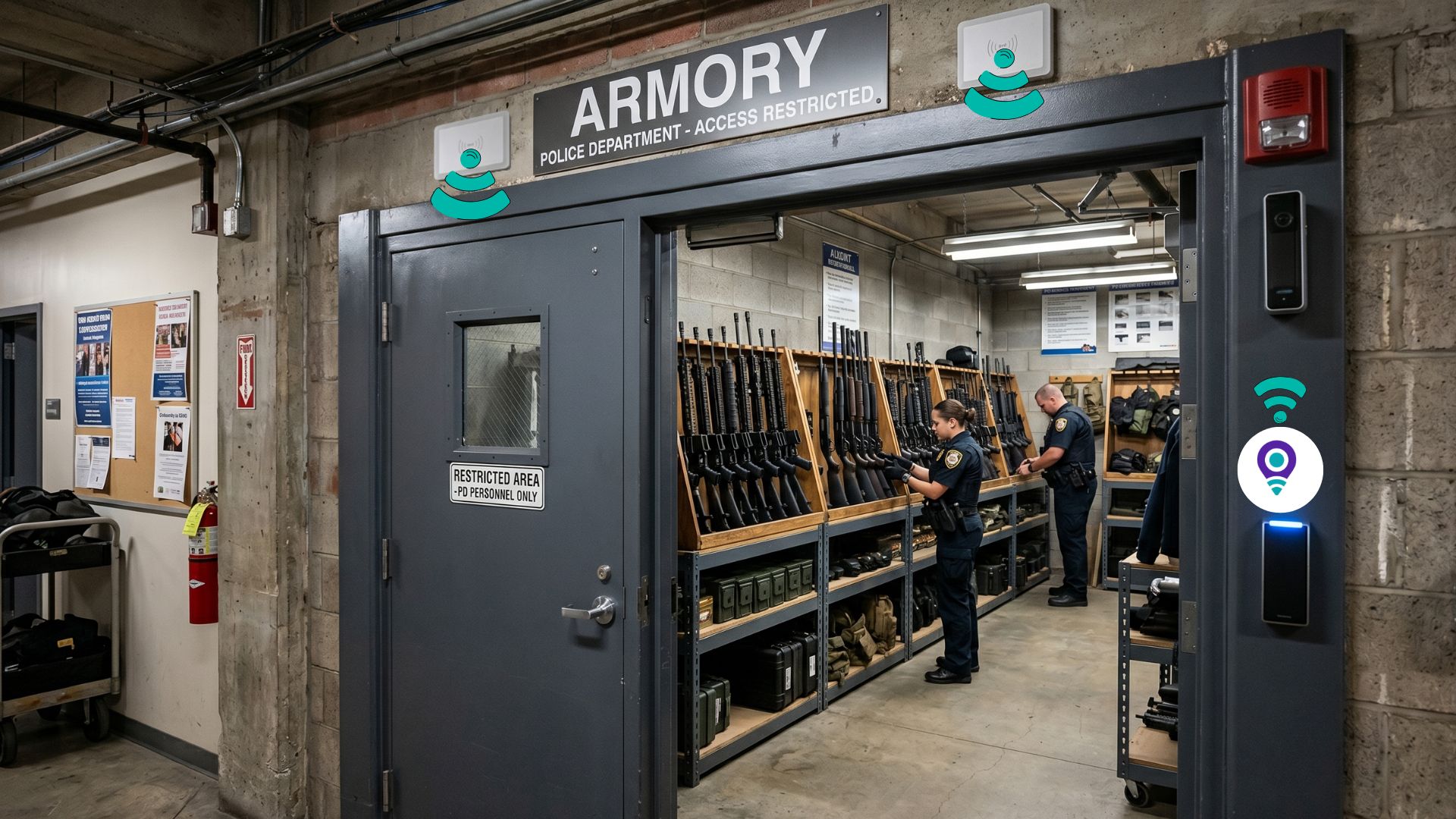
In military bases, police departments, embassies, and security organizations worldwide, a single missing weapon can trigger catastrophic consequences—from complete base shutdowns to compromised national security operations. Yet despite these high stakes, many organizations still rely on manual, paper-based weapon tracking methods instead of an armory management systems that can reduce errors, improve accountability, and create a reliable audit trail.
Armory management systems represent a transformative solution. By leveraging RFID weapon tracking technology, real-time weapon tracking, and automated workflows, these systems eliminate human error, provide instant audit trails, and enable small teams to manage thousands of weapons, gear, and ammunition with precision. This blog explores how armory management reduces mismanagement, why adoption remains surprisingly low, who should implement it, and how modern IoT solutions like IoTWeaponTracker make configuration effortless.
The High Cost of Weapon Mismanagement
Weapon mismanagement isn’t just an administrative inconvenience—it’s a security crisis with real-world consequences:
Operational Disruptions
Legal and Compliance Risks
- Police departments face lawsuits when weapon assignment records are lost or falsified
- Failure to produce audit trails from acquisition to disposition violates ATF regulations
- Officer qualification records that can’t be verified immediately create liability exposure
Security Vulnerabilities
- Weapons going unaccounted for during training exercises or deployments
- Ammunition discrepancies that compromise operational readiness
- Inability to track which officer has which weapon at any given moment
Financial Impact
- A single missing firearm can cost $10,000+ in investigation and replacement costs
- Man-hours spent on manual audits could be redirected to mission-critical tasks
- Lost gear and equipment accumulate to hundreds of thousands annually
Why Companies Still Don’t Use Armory Management Systems
Despite clear benefits, adoption remains surprisingly low. Here are the primary barriers:

“It’s too expensive”
Organizations fixate on software licensing costs while ignoring the far greater cost of a compliance failure, a legal audit, or a lost weapon incident. The ROI calculation is almost always lopsided in favor of the system.

“Our current process works”
Manual processes feel stable until they aren’t. Organizations running paper logs rarely discover how broken their process is – until an inspection, audit, or incident forces the issue.

Resistance to change from staff
Armory personnel trained on manual methods often resist digital systems. Without leadership mandate and phased training, adoption stalls before it begins.
“We’re not tech-ready”
Armory personnel trained on manual methods often resist digital systems. Without leadership mandate and phased training, adoption stalls before it begins.
Who Can Use an Armory Management Systems
The answer is broader than most assume. Any organization that issues, tracks, stores, maintains, or audits weapons, gear, and ammunition operates in the target zone for armory management software.
Military Base Operations
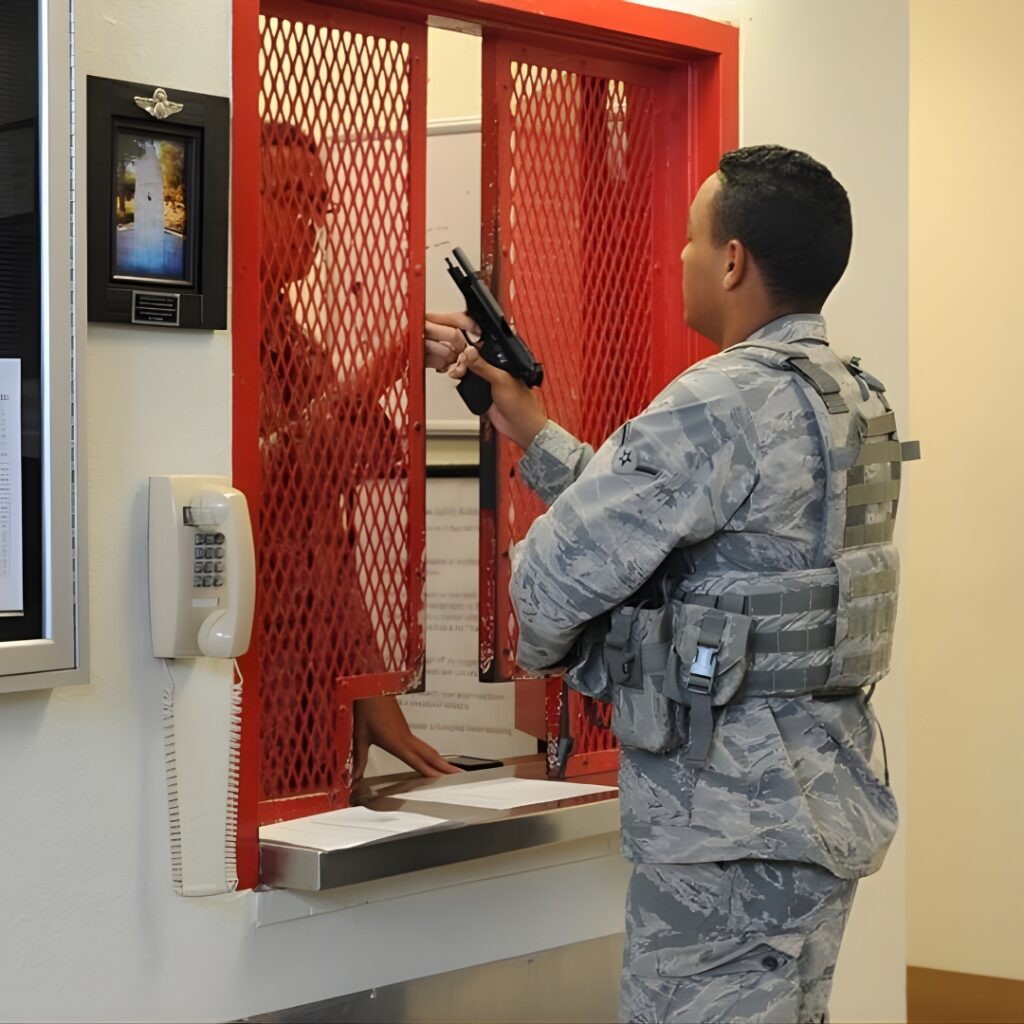
Army, Navy, Air Force, Marines, and defense forces managing daily issuance of rifles, pistols, and automatic weapons across multiple shifts. Any missing weapon can trigger a complete base shutdown — zero tolerance for error.

Police Departments & Law Enforcement
Municipal, state, and federal law enforcement agencies under intense public and legal scrutiny. Requires instantaneous audit trail from acquisition to final disposition, with continuous officer qualification validation.

Embassies & Intelligence Agencies
CIA, FBI, diplomatic security, NATO, and embassy security worldwide. Fast-moving operations requiring instant inventory accuracy. IoTWeaponTracker was initially developed for U.S. Department of State tracking weapons to embassies and agents globally.

Critical Infrastructure Protection
Government agencies protecting power plants, water facilities, and military infrastructure. Need rapid response capability and the ability to track all deployable weapons and gear, including mobile armories deployed to threat locations.

Private Security Organizations
Security firms and defense contractors managing significant weapons, gear, and ammo across domestic and international operations. Complex workflows requiring real-time visibility of what they have, where it is, and who touched it last.
How IoTWeaponTracker Modules Make installation Easy
IoTWeaponTracker is built around discrete functional modules that can be configured independently based on an organization’s specific operational needs, no over-engineered monolith, no months of implementation. Each module addresses a distinct layer of armory management.
Weapon & Asset Registry
- Barcode/RFID-based weapon enrollment
- Serial number, model, caliber, and condition tracking
- Full asset lifecycle from acquisition to disposal
- Attachment and accessory tracking per weapon
Check-Out / Check-In
- Scan-based issue and return with timestamp
- Officer/soldier assignment with authorization gates
- Shift-based workflows and bulk issuance
- Real-time overdue alerts and lock-out flags
Ammunition Management
- Real-time round-level accountability
- Lot tracking, expiry management, storage location
- Issue vs. return reconciliation per mission
- Automated reorder threshold alerts
Qualification & Compliance
- Officer qualification records per weapon type
- Expiry alerts before certifications lapse
- Automated block on issuing to unqualified personnel
- Audit-ready qualification history reports
Maintenance & Inspection
- Calendar-based cleaning and service scheduling
- Test-firing records linked to specific weapons
- Condition grading after each inspection cycle
- Technician assignment and work order management
Audit Trail & Reporting
- Full chain-of-custody log, unalterable
- Compliance reports for inspections on demand
- Transfer documentation between units/locations
- Disposition records for decommissioned assets
Unlike generic asset management tools, IoTWeaponTracker modules are pre-configured with defense and law enforcement workflows – meaning setup time is measured in days, not quarters. Organizations can activate only the modules they need, then expand as operations grow.
How 1–2 Armory Personnel Can Manage Thousands of Assets
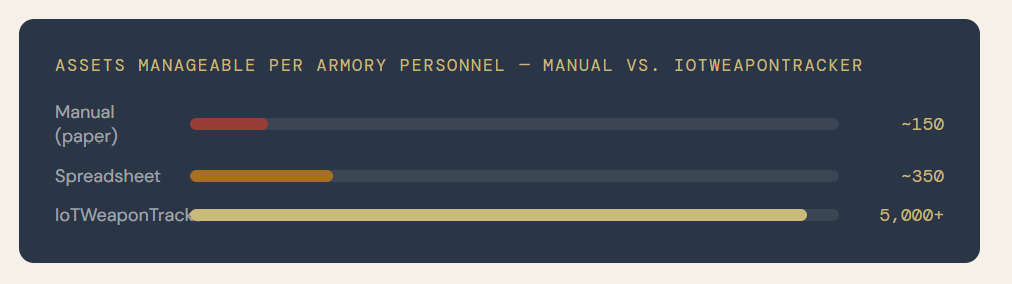
The most common objection to large-scale armory digitization is staffing – “we don’t have enough people to manage this.” IoTWeaponTracker inverts this entirely. The system doesn’t require more people; it multiplies the effectiveness of the people you have.

Armory Officer – Operations Lead
Manages all active issuance, returns, and daily operational flow.
Scan-based check-out in under 10 seconds per weapon
Barcode or RFID scan auto-populates officer ID, weapon serial, timestamp, and location. No manual entry. A 50-weapon morning issuance takes minutes, not hours.
Real-time alerts for exceptions, not routine monitoring
Instead of watching every asset, the officer only responds to system-generated alerts: overdue returns, unqualified personnel attempting issue, ammo discrepancies. The system monitors; the officer acts.
One-click audit reports for any inspection
When an inspector walks in, a complete chain-of-custody report for any weapon, any time period, is generated in seconds — not assembled over days from paper logs.
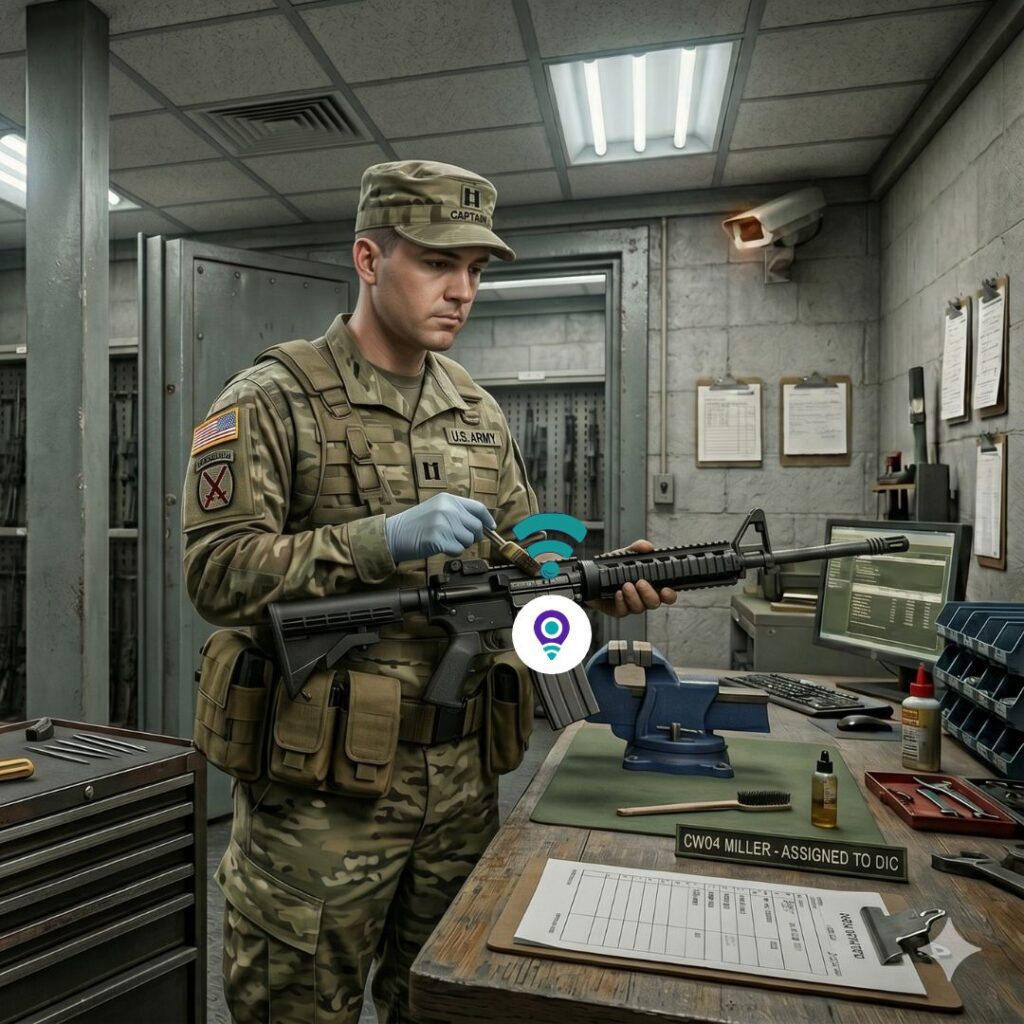
Armory Technician – Maintenance & Compliance Lead
Manages all maintenance, inspections, qualification, and disposition.
Calendar-driven maintenance – Zero missed service cycles
Cleaning schedules, test-firing cycles, and inspection dates are configured once per weapon category. The system auto-generates work orders and flags overdue items. The technician works from a daily task queue, not from memory.
Qualification expiry monitoring for entire force
For a department with 500 officers, the technician monitors a dashboard — not 500 individual records. Expiry alerts are surfaced automatically 30/60/90 days in advance, and the system prevents issue to lapsed qualifications.
Transfer and disposition management
Weapons transferred between units, bases, or decommissioned are processed with full documentation — condition assessment, destination record, and approval chain — through a single workflow, not an interagency paper trail.
The shift IoTWeaponTracker creates is fundamental: armory personnel move from reactive manual work (counting, filing, searching) to proactive oversight (reviewing dashboards, acting on alerts, approving exceptions). Two people can do what previously required a team — because the system does the routine work.